









How Knowledge Graphs Influence AI Search Recommendations
Behind every confident answer an AI assistant gives about a business, there’s often a quieter structure doing the work—a web of connected facts about who that business is. Understanding knowledge graphs AI search recommendations rely on is the mechanism-level piece most GEO strategy discussions skip over.
Key Takeaways
- A knowledge graph is a set of people, businesses, locations, or concepts — that are connected by direct relationships.
- AI systems reference knowledge graph data to verify facts and build confidence about an entity before including it in a recommendation or answer
- Agencies can actively strengthen a client’s knowledge graph presence through Wikidata, structured schema, and consistent third-party citations
What a Knowledge Graph Actually Is
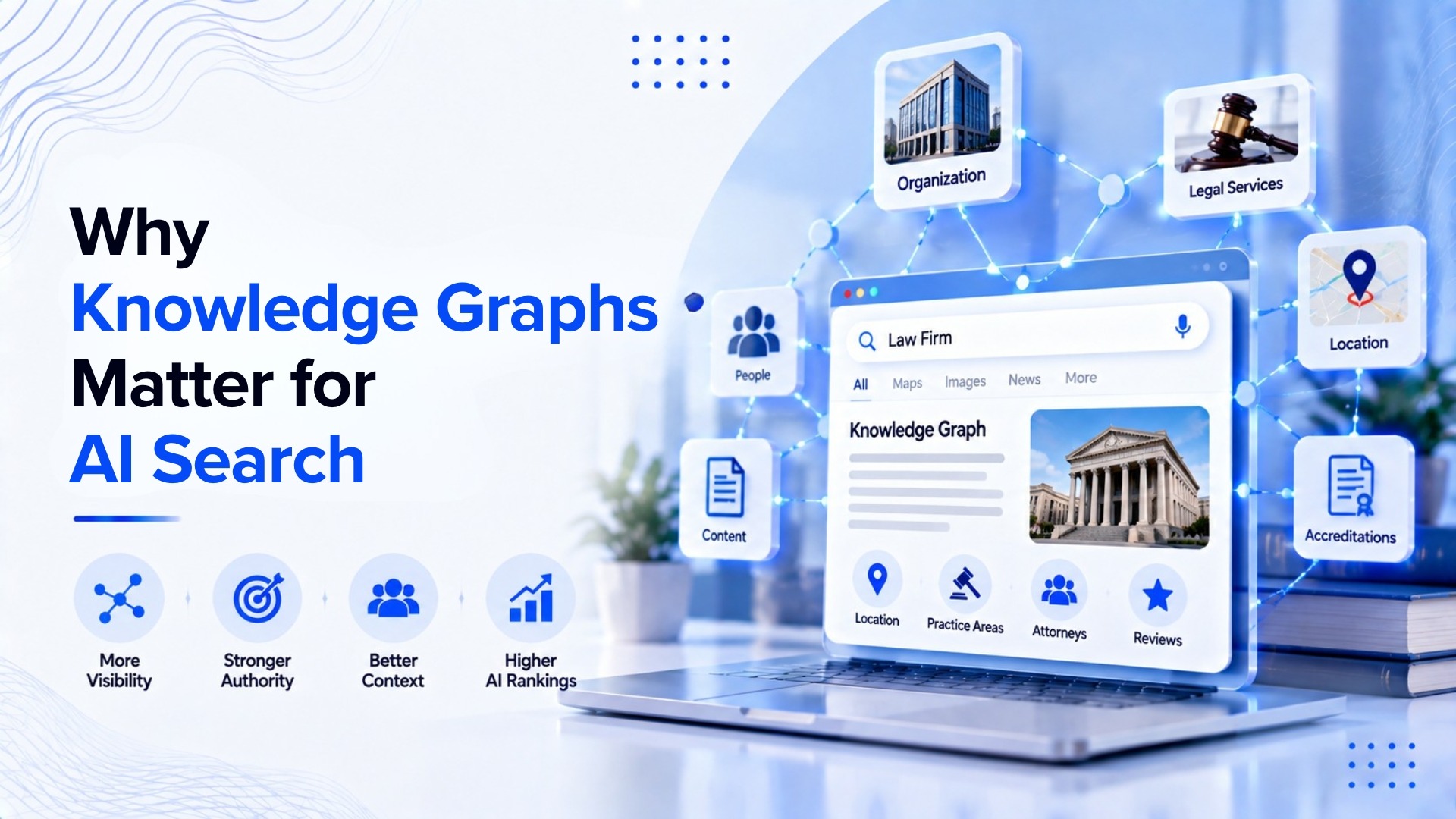
A knowledge graph is a type of knowledge representation that is organized in a structured graph. Instead of being able to say, “This is a webpage of a law firm,” a knowledge graph knows the answer: “This entity is a law firm practicing in this city with these practice areas, associated with these attorneys, having these credentials.”
It is not a keyword-style index and is a critical element in knowledge graph SEO 2026 that must be considered.
How Google’s Knowledge Graph Connects Entities and Relationships
Google has its own Knowledge Graph, which has been in use for years when searching for things you know, be it a company, a person or a landmark. Google Knowledge Graph entity SEO work focuses on ensuring a business is clearly and accurately represented within this structure: consistent naming, clear categorization, and verified relationships to related entities like locations, services, and affiliated people.
The stronger and more consistent these entity relationships are, the more confidently Google’s systems—and increasingly, AI systems built on similar infrastructure—can reference that entity in a response.
How AI Systems Use Knowledge Graph Data
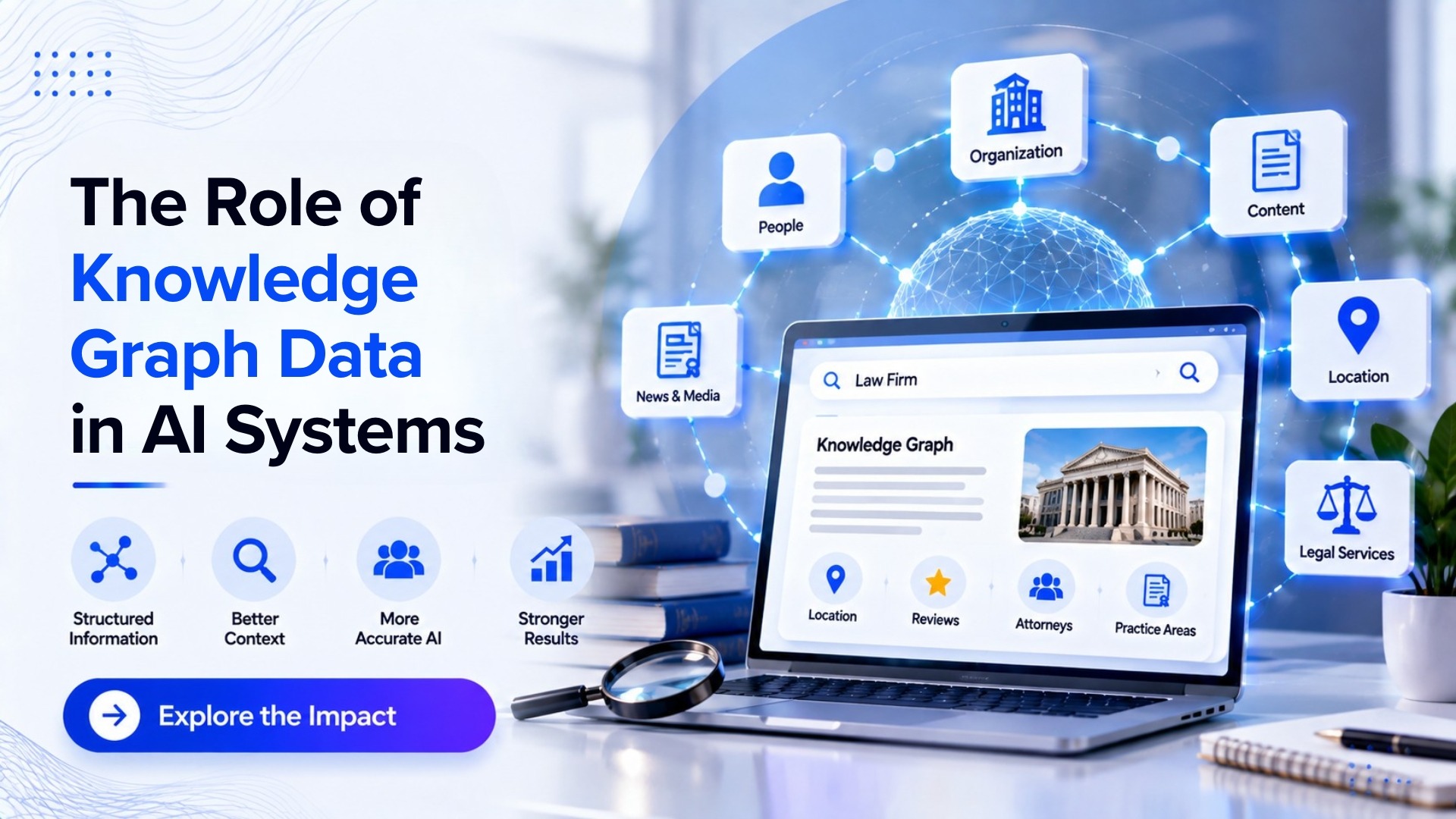
How knowledge graphs work AI systems is fundamentally about verification. When an AI platform is deciding whether to cite or recommend a business, having that business represented clearly within a structured knowledge graph gives the system a higher-confidence data point to draw from, compared to relying solely on unstructured web content that requires more inference to interpret correctly.
This is particularly relevant for Gemini, given its direct connection to Google’s infrastructure, but the underlying principle—that structured entity data builds AI confidence—extends across platforms more broadly.
Diagram Description: How Entities Connect
For designer: illustrate a central node representing a business entity, with branching connections to related entities—location, service categories, associated people (e.g., attorneys, technicians), credentials, and review platforms. Each connection should be labeled with the relationship type—located in, specializes in, credentialed by—showing how a single entity gains richness and verifiability through multiple, clearly defined relationships rather than existing as an isolated data point.
What Agencies Can Do to Build Knowledge Graph Presence
There are some real steps to take here that make a difference:
Wikidata entries—Because any Wikidata entry can be created or claimed by the business, this means that a structured Wikidata entry for a business with AI can be accessed directly by AI systems as an entity record.
Comprehensive schema markup—for any organization, local business, and Person schema (using for key people or attorneys)—provides learnable and appropriate signals relating to entity relationships.
Consistent structured citations—ensuring the business is accurately and consistently represented across directories, professional associations, and third-party databases—reinforce the same entity relationships from multiple independent sources.
How Knowledge Graph Presence Correlates With AI Citation Likelihood
Businesses with strong, consistent knowledge graph presence tend to be referenced more confidently by AI systems, since the underlying data has already been effectively verified through multiple structured sources rather than requiring the AI to infer credibility from scattered, unstructured content alone. This connects directly to the foundational work covered in our Entity SEO post, and the broader ranking mechanics in our AI Search Ranking Factors post. Our GEO explainer post and GEO service page show how this technical foundation fits into a complete client strategy.
FAQs for AI Search Recommendations
What is a knowledge graph in the context of AI search?
It’s a structured system connecting entities — businesses, people, places — through defined relationships, allowing search and AI systems to verify facts with more confidence than unstructured content alone provides.
What types of data capacity do AI systems like ChatGPT use?
They use structured entity data to ensure facts and grow confidence before taking quotes from or suggesting a company – preferring alternatives that are packed with information and/or verifiable.
How can agencies build a client’s knowledge graph presence?
Through Wikidata entries, comprehensive schema markup, and consistent, accurate representation across directories and third-party databases.