











Top GEO Tools Agencies Should Use in 2026
Running GEO delivery without the right tools means guessing at what’s working. The right GEO tools for agencies in 2026 turn AI visibility work into something measurable and repeatable across client accounts. Here’s what actually belongs in an agency’s toolkit, organized by function.
Key Takeaways
- GEO Tools for Agencies has five categories of the right GEO tools: visibility monitoring, entity management, schema, content optimization, and reporting.
- While the AI Visibility Toolkit is ideal for agencies that have existing accounts with Semrush, standalone tools can be more budget-friendly for new agencies.
- Google Search Console, Wikidata, Looker Studio, and other tools are available for free and provide essential coverage for entities and reporting requirements.
AI Visibility Monitoring Tools
These track whether a brand shows up across ChatGPT, Gemini, Perplexity, and AI Overviews.
Semrush AI Visibility Toolkit — Tracks how often a brand appears in AI-generated answers, plus sentiment and share of voice against competitors. It’s an add-on requiring Semrush’s Guru tier at roughly $208 a month billed annually, or $249.95 monthly, so it makes the most sense for agencies already using Semrush for other work. It covers a wide range of AEO use cases related to monitoring and auditing, though it leans toward keyword-focused reporting rather than deep prompt-level analysis.
Standalone alternatives — For agencies not already on Semrush, dedicated tools like RankAI start around $49 a month and focus specifically on AI search execution and citation tracking, without the cost of a full SEO suite.
These tools form the backbone of any real AI visibility tools 2026 stack, and connect directly to the audit process in our AI Visibility Audit post.
Entity Management Tools
Entity signals, the consistent facts search engines and AI systems associate with a brand, need their own toolset. Google Search Console remains essential for tracking indexing and structured data errors, at no cost. Wikidata, also free, lets qualifying brands build a sourced, neutral entity profile that AI systems can pull from independently of the brand’s own website. Brands that have a Knowledge Panel can closely watch it with Google to quickly identify stale or misleading content before this is incorporated into AI-generated responses.
Schema Generation Tools for GEO Tracking
Structured data is essential to help content be machine-readable, and it’s a piece of GEO Tools for Agencies tracking tools that agencies often overlook. At no cost, easy-to-use, and without coding, Merkle’s Schema Markup Generator is a great solution for the creation of FAQPage, LocalBusiness, and Article schemas. If you have multiple clients whose WordPress sites you manage, and you have them set up as pages of an array of dozens, then RankMath is a WordPress plugin that automates the entire process directly inside of WordPress, with a free version and a paid version depending on volume.
Content Optimization Tools
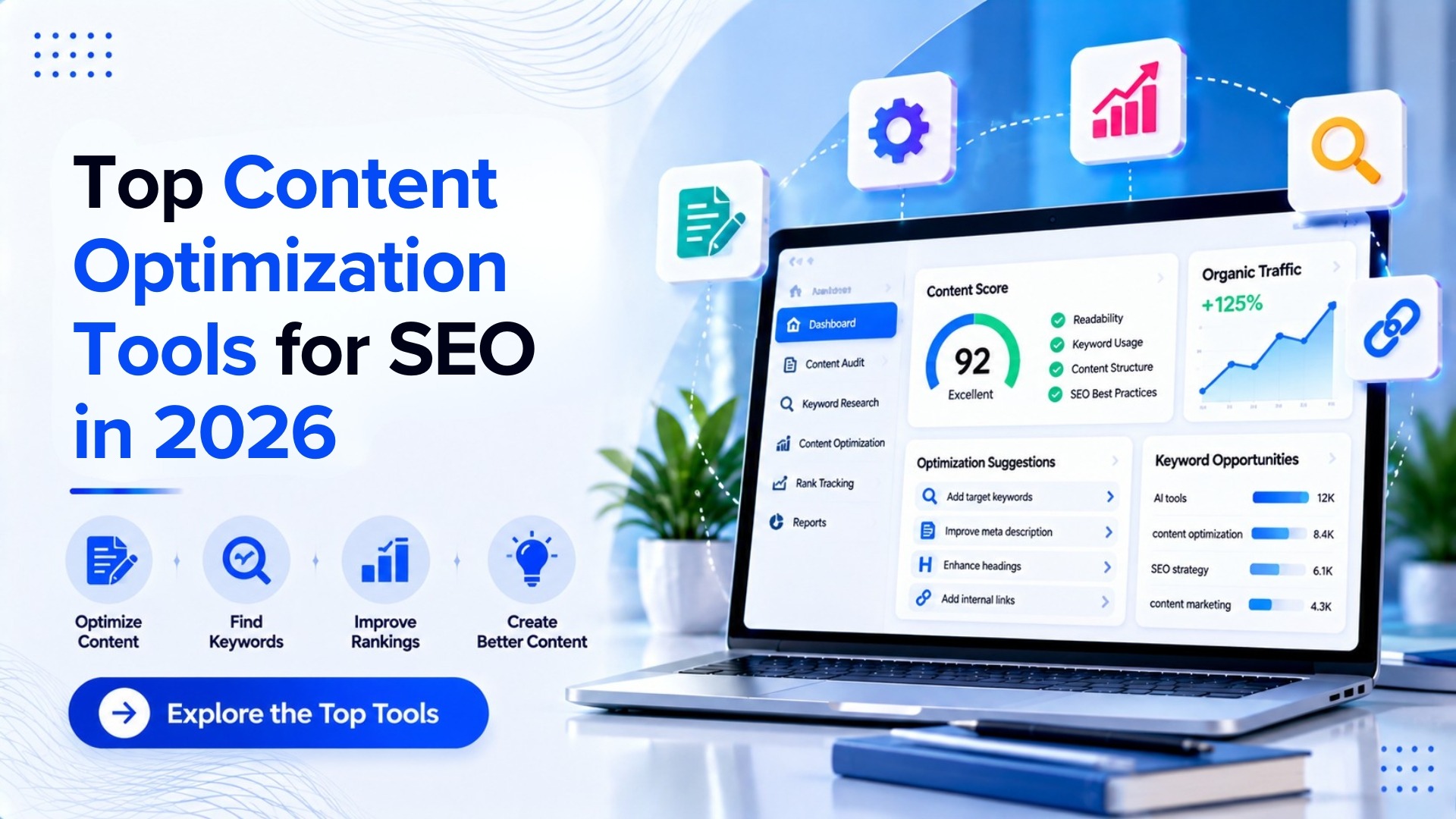
This is where the Best AI search optimization tools for actual content production come in.
Surfer SEO — Combines NLP-driven content scoring with AI search visibility tracking across ChatGPT, Perplexity, Gemini, and AI Overviews. Pricing runs from a free plan up to $359 a month, with the Standard tier around $119 a month. It’s a strong fit for agencies producing content at volume who want optimization and citation tracking in one place.
Clearscope — A premium option focused on editorial-grade content grading, with Prompt Tracking that monitors ChatGPT and Gemini citations directly. Essentials starts around $129 a month, positioning it for teams that want deeper NLP grading over broader execution features.
Agencies producing content at scale for multiple clients should weigh these against the process outlined in our Building GEO Packages post.
Reporting Tools
Once monitoring and content work are underway, Google Looker Studio remains the most practical free option for building custom AI visibility dashboards, pulling data from Search Console and exported monitoring tool reports into a single client-facing view. Our How to Report AI Visibility post covers exactly what metrics belong in these dashboards.
For agencies that don’t want to manage five separate subscriptions across client accounts, our GEO service page covers how this entire toolkit gets handled as part of a managed engagement.
FAQs: GEO tools for agencies 2026
Which AI SEO tools are ideal for optimizing ChatGPT, Perplexity and Gemini in 2026?
Both Semrush AI Visibility Toolkit and Surfer SEO index citations on these sources—although the prices and capabilities differ depending on the platform, either of the two could be a solution if your agency is searching for a tool with paid-for capabilities or opting for a standalone.
Do agencies need paid tools for GEO, or are free tools enough?
Free tools like Google Search Console and Wikidata cover entity fundamentals, but consistent AI visibility monitoring at scale typically requires a paid tracking tool.
What is an acceptable monthly spending amount for GEO tools?
Prices range greatly, starting with about $50 a month for a single standalone tool to several hundred for a complete suite of tools including Monitoring, Content, and Reporting across multiple clients.
Implementing the proper GEO tools for agencies in 2026 requires a bit of trial and error, but getting a tool of each type listed above can provide agencies with the building blocks needed to report to clients.