Key Takeaways
- Facebook prioritizes meaningful engagement such as comments, shares, saves, and conversations over passive likes.
- High-quality, original content consistently performs better than duplicated or low-value posts.
- Relevance matters—Facebook shows users content based on their interests, interactions, and behavior.
- Video content, especially short-form videos and engaging reels, continues to receive strong visibility.
Clients still ask why their Facebook posts barely get seen. The honest answer starts with understanding how Facebook Algorithm 2026 actually ranks content — and it’s very different from boosting engagement with likes and comments the way it worked years ago.
How the Facebook Algorithm Actually Works in 2026
Facebook ranks content through a four-step process: inventory, signals, predictions, and relevance score. The system fetches every content a user might have interest in, analyzes on-the-fly behavioral patterns, calculates the likelihood of their attention, and contrasts posts according to that probability instead of their chronological order of appearance.
The first step in understanding how the Facebook algorithm works in 2026 is to realize that a user can see up to 50% of their feed from accounts they may not follow—not solely because it gets recommended, but because it gets recommended.
Comprehending What Engagement Signals Are Most Important
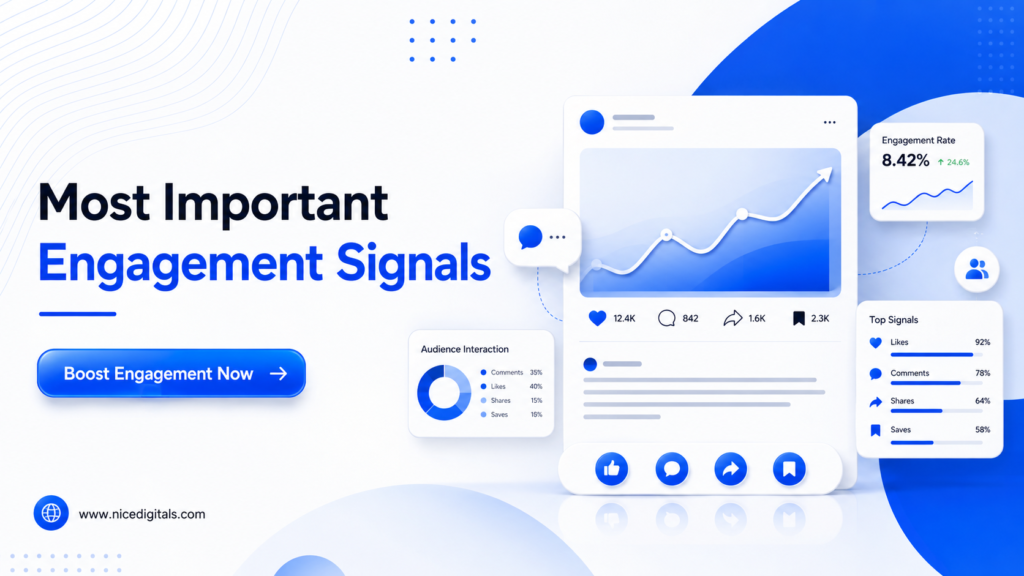
Not all engagement counts equally under current Facebook algorithm changes 2026. The strongest signals include:
- Saves and shares — weighted more heavily than likes or reactions
- Meaningful comments — longer, thoughtful replies signal real interest, not just emoji reactions
- Watch time and completion rate — especially for Reels, which now drive most discovery
- Repeat interactions — the same users engaging with a page consistently over time
Engagement bait — “like if you agree” style posts — gets actively suppressed rather than rewarded, since Facebook has explicitly deprioritized forced-interaction tactics.
Page Reach vs Personal Profile and Group Reach
This is often the hardest thing to explain to clients: business Page reach is structurally limited compared to Groups and personal profiles.For business Pages, their median organic reach for posts is usually less than 2% of followers, and Facebook Groups perform better in terms of reach, typically due to the fact that group posts are an indicator of community engagement instead of broadcast marketing.
Agencies advising clients on Facebook page growth strategies 2026 should set expectations accordingly — a Page alone rarely drives meaningful organic reach anymore without a Group or Reels strategy layered on top.
What Actually Drives Organic Reach Now
Under the current system, the tactics that move the needle are:
- Reels — Facebook’s primary discovery surface, reaching new audiences beyond existing followers
- Groups — higher distribution than Pages, rewarding genuine community participation
- Original content — recycled or reposted material gets deprioritized
- Fast response to comments — replying quickly and often signals relationship strength
Photos have consistently high engagement rates from existing followers, while Reels are the quickest way to attract new followers.
The truth about organic strategy that Agencies should give to the client.
It’s more important to have realistic expectations than to guarantee quick results. Agencies should communicate:
- Organic Page reach alone is not a reliable growth channel anymore
- Reels and Groups require consistent investment, not occasional posting
- Paid distribution is necessary to supplement organic reach for consistent visibility
- Quality and consistency beat posting frequency — three to five strong posts a week outperform daily filler content
This organic strategy conversation is separate from paid delivery, which shifted significantly under Meta’s Andromeda system — covered in detail in our Meta Ads Algorithm post. Agencies managing both organic and paid should treat them as connected but distinct disciplines. For paid delivery specifically, our White Label Facebook Ads post covers execution under Andromeda.
Bundling Organic and Paid as a Service
Since organic reach alone rarely sustains client growth, many agencies now bundle organic strategy with paid support as part of a broader offering. If a client requires both services, you can see how they work together on our Social media service page.
FAQs For Facebook Algorithm
So what is the Facebook algorithm in 2026?
Prioritizes saves, shares, and the importance of comments (not passive likes) by ranking the content through inventory, signals, predictions, and a relevance score.
What is causing my Facebook Page to have a low organic reach?
The number of people who can be reached by your business Page is structurally restricted compared to Groups and Reels, where most business Pages are able to reach under 2% organically.
So what are the top Facebook Page Growth Ideas for 2026?
The most sustainable organic results come from traffic generated by consistent Reels posting and active participation in Groups, as well as original content, and quick responses in comments.
Final Thoughts
The Facebook Algorithm 2026 will prioritize formats that enable users to discover and interact with content, such as Reels and Groups, over broadcasting things on the Pages.The Facebook algorithm 2026 will be more centered around formats that allow people to discover and interact with content, like Reels and Groups, rather than Broadcasting things on the Pages. Organic agencies that help their clients establish a reasonable expectation, coupled with paid efforts, are providing them the best possible representation of what can be accomplished in today’s market.