










Legal Content Strategies That AI Search Engines Prefer
Most law firm content is written to satisfy a human skimming a page. A genuinely effective legal content strategy for AI search needs to satisfy something different — a system trying to extract a precise, suitable answer.
Key Takeaways
- FAQ-formatted content with clear Q&A structure gives AI systems the cleanest possible material to extract and cite directly
- Authoritative citations to statutes, case law, and credentialed sources are essential for legal content to pass AI systems’ trust evaluation
- Content depth matters more than length alone — genuinely substantive answers outperform padded content optimized purely for word count
FAQ-Format Legal Content
Long paragraphs are constructed in a way that does not work well for AI because they lack the question-and-answer format. There is always a clear structure of questions and answers, while long paragraphs tend to work better for humans and don’t perform as well with AI. In cases where the question “How long do I have to file a personal injury claim in Texas?” is directly answered with a clear, specific response, AI programs can a lot more reliably gather and quote this response from a piece of “description of a practice area” that spans several paragraphs.
This is one of the simplest, highest-impact changes agencies can make immediately — restructuring existing legal content around explicit questions clients are actually asking.
Q&A Schema for Legal Queries
Beyond visible content structure, implementing FAQ schema markup gives search engines and AI systems an explicit, machine-readable signal about which content answers which specific question. This doesn’t replace good content structure — it reinforces it, making the same clear Q&A format even easier for AI systems to parse confidently.
Authoritative Citation Structures
Content for ChatGPT law firms publish needs genuine, verifiable sourcing to be considered trustworthy. Citing actual statutes, relevant case law, or government legal resources — rather than making broad claims without support — significantly strengthens how AI systems evaluate the content’s credibility. This connects directly to the broader trust-building work covered in our Entity SEO for Law Firms post.
How to Write Legal Content That Passes E-E-A-T for AI
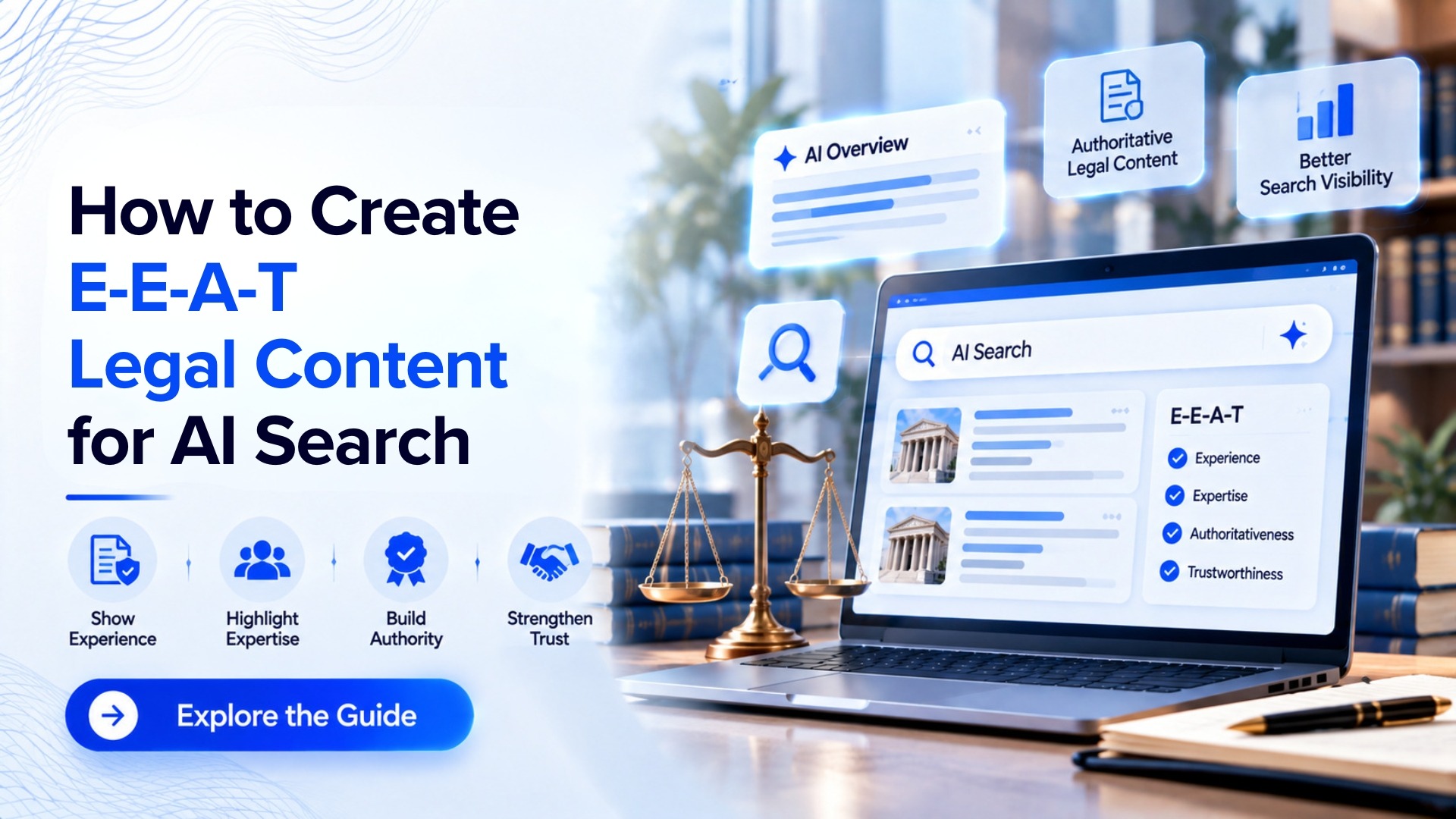
Every substantive legal content piece should include clear author attribution — ideally from a credentialed attorney — along with demonstrated practical experience, not just theoretical knowledge. The legal content strategy for AI search created for AI visibility should demonstrate rather than just assert a level of expertise: provide specific legal precedent or outcomes, and leave out any broad generalities that may be relevant for any law firm in any location.
Word Count and Depth Signals
Longer isn’t automatically better — genuine depth is what matters. A 500-word page that addresses a clear legal question directly and thoroughly will supersede a longer 2,000-word page that does not lead to a clear and complete answer. The objective is to announce a genuine answer to the question, not just cram a certain amount of words.
How to Structure Practice Area Pages for AI Readability
Practice area pages perform best when organized around specific, common client questions rather than generic service descriptions. Clear headers that map directly to real questions, concise direct answers near the top of each section, and supporting detail beneath — this structure serves both human readers and AI extraction simultaneously.
Before and After: A Content Example
Before (regular): “Our firm has successfully worked with lots of personal injury cases and asserted our clients’ rights. The accidents can be really devastating, and we’re here to help through this hard time.
Q: Do I have to wait a certain amount of time after (AI-optimized)? Attorney name has successfully handled over [X] personal injury cases and advises a law firm to be contacted immediately for the best evidence and to ensure that you preserve your claim.
The second version gives an AI system a specific, extractable answer backed by demonstrated experience — exactly what citation-worthy legal content requires.
Using This as a Content Brief Template
This can be adapted to be used by agencies in briefing their content for law firm clients: Frame the questions the page will provide an answer to, insist on attorney-level citation and signals of expertise, include authoritative references where applicable, and focus on providing answers rather than marketing statements. Our AI Search Ranking Factors post and GEO service page cover how this fits into a complete strategy, and our Law Marketing Agencies industry page shows how to package this as a standalone content service offering.
FAQs
What makes legal content AI-citation-worthy?
Potential benefits for agencies that adopt this approach when writing pages for content for law firms can be applied right away during the activities of briefing content for attorney clients: know what questions the page should be answering, insist on attorney-level attribution and genuine expertise cues, insist on authoritative citations when relevant, and focus on giving direct answers; avoid markety jargon.
How should law firms structure practice area pages for AI search?
Around specific client questions with direct answers near the top of each section, supported by detail and proper attribution beneath.
Does content length matter for legal AI search visibility?
Genuine depth matters more than raw word count — a concise, thorough answer typically outperforms a longer page that never clearly answers the actual question.