










White Label PPC Management: The Agency Guide for 2026
Paid ads can be a way for an agency to be successful in expanding quickly, but they’re challenging to staff. Platforms are evolving rapidly, relatively small budgets are in peril and clients want results now. White label PPC management gives you the ability to have prospecting campaigns but under your brand, and a pro team to manage them.
Key Takeaways
- White label PPC is simply the aspect that a partner will place your ads behind the scenes and you will own the relationship as well as the brand.
- Agencies outsource to launch faster, without taking on risks, and without having to create a large team and cover several platforms.
- The right partner provides transparency in reporting, control over access and a pricing model that is measured by your margin.
What White Label PPC Management Is, and What It Isn’t
What is white label ppc? An outside group plans, creates and optimizes paid campaigns, which you resell as your own. The client speaks to YOU. Reports come with your logo. The partner stays in the background.
It’s not a quickny way to generate leads or a backdoor method to bypass strategy. However, you have to be familiar with the client’s objectives, expectations and maintaining the relationship. It doesn’t involve giving away all your company either. You retain the client, the contract and the account management.
The advantages of Agencies Opting For PPC Outsourcing instead of Hiring
For agencies, there are common problems that can be resolved by PPC outsourcing:
- There is a slow and risky hiring process. The expert PPC manager is time-consuming to discover, train, and retain.
- Demand is uneven. A full-time salary is hard to justify when client numbers rise and fall.
- Platforms move fast. Specialists spend every day inside the ad tools and keep up with changes.
- Capacity. A partner can take on more accounts without overloading your team.
Our White Label Agency page explains how partnerships like this work in practice. For a cost comparison of hiring versus partnering in web work, the same logic applies here.
Google Ads vs Meta Ads vs Amazon PPC: Your White Label Options
Every channel is for various goals.
Google ads management White Label offers search, Performance max, Shopping and Display. It works well when people are actively searching for what the client sells. See our White Label Google Ads post for details.
White label Facebook Ads (Meta Ads, covering Facebook and Instagram) suits brands that need to create demand, show visual products, or retarget visitors. Our White Label Facebook Ads post covers it in more depth.
Amazon PPC is for sellers who compete inside the marketplace. It uses a different system, with Sponsored Products, Brands, and Display. Read our White Label Amazon PPC post for specifics.
A partner who has extensive coverage is helpful if many of your clients are on multiple channels because it’s not only about managing vendors; it’s all about managing weight.
How to choose a good White Label PPC Partner
Strong white label pay-per-click management partners usually show:
- Platform certifications and real experience in the channels you need
- Access you can control – like having a manager account to ensure that the client’s ad account falls under your control.
- Onboarding, testing and optimisation processes that are clearly defined.
- Honest expectations, with no guaranteed results
- Ensuring confidentiality – supported by an NDA
- Instant communication, meaning that the client’s questions are not left unanswered.
Request sample reports and an understanding how they deal with changes of budget and errors.
How White Label PPC Is Reported to Clients
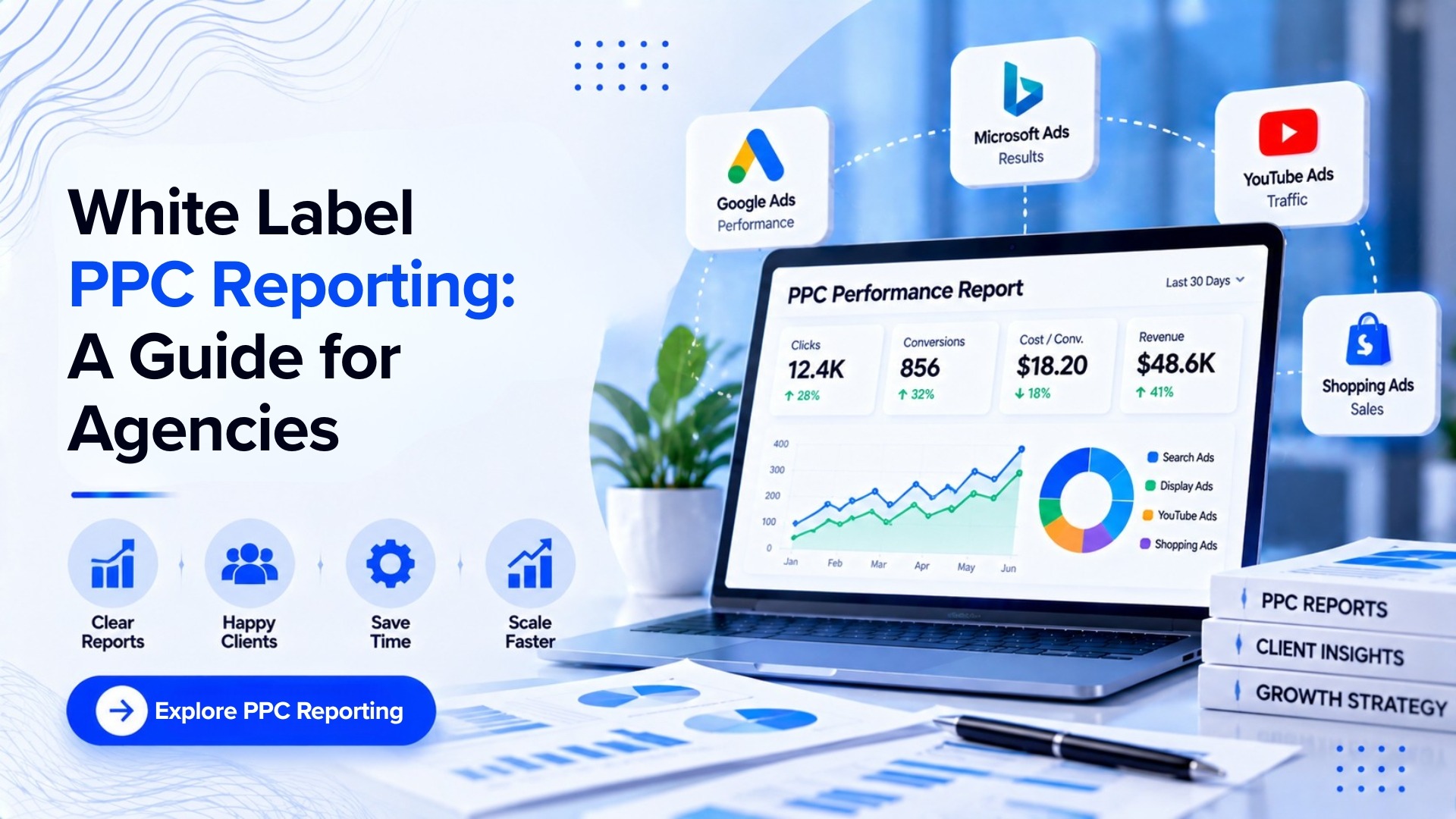
Good reporting is the heart of retention. Reports should include your company’s branding and contain the following information:
- Spend, Clicks, Conversions and Cost per result.
- ROAS or CPA, aligned with conversion objectives.ROAS/CPL in line with conversion objectives
- What was tested and what changed
- Tipping points on recommendations to take over the next month!
Be sure to keep the language simple. Clients don’t care about your CTR, they care about your leads and sales! A short call each month, led by you, builds trust.
Pricing Models for White Label PPC
There are three common approaches. The fee will be proportional to the budget. It is rewarding for growth, but can be expensive on large budgets.
- Flat monthly fee. It’s easy to resell, predictable to both parties, but there can be a bit of an unfairness side step when spending changes dramatically.
- Per campaign. Can carry out single or limited launches or projects.
- Get your own margin working either way: partner cost plus amount of your time spent on onboarding, reporting, re-calls etc. and client calls!
Then set your resell price. Remember that ad spend itself is paid to the platform, not included in management fees.
How to Move an Existing Client From In-House to White Label PPC
- Audit the account. Check structure, tracking, budget and results.
- Set shared goals. Come to a common understanding of the meaning of success.
- Transfer access safely. Use proper permissions rather than sharing passwords.
- Check tracking first. Confirm conversions are measured correctly before changing campaigns.
- Change in stages. Don’t redevelop all at once.
- Dialogue with the client. Describe the steps the problem is getting solved and when to get updates.
FAQs: White Label PPC Management
So what is white label PPC?
This is a service and a partner runs paid ads while your agency takes over the client relationship and gets to put its brand on the product.
What is a white label Google Ads?
You take lead in client management, ST (sales and marketing) and the brand-building aspect, and the partner is responsible for building and optimizing campaigns. You’re reported on and the account is under your supervision.
What alternative is white label PPC when compared to in-house PPC?
Yes, for many agencies, particularly those who have just one or two clients or irregular dips and swells in business. A partner not only saves on paying salary and training, but they also save on time out of the office. In-house hiring might be the way to go when there is a need for consistency at higher volumes.