










Creating AI-Optimized Content at Scale for Agency Clients
It’s a breeze to write one blog post about the subject of AI that is also easy for Writefrica to read. Consequently, doing it over the same set of 10, or 20 or 50 client accounts is something else. Instead of developing honed, case-specific good intentions, create AI-optimized content at a scale approach. The following tutorial guides you in the construction of one.
Key Takeaways
- Creating, executing, and having an optimized brief and QA process is something that has to be automated and streamlined into a process rather than done by itself one by one per copy or piece.
- The six main elements—structure based on questions, specific answers, citations, FAQ schema, mention of entities, and linking to internal pages—are common to all business sectors.
- One of the quickest ways to teach writers how to recognize AI-citation-worthy content is with a good before-and-after sample.
The 6 Elements of AI-Optimized Content
Before scaling anything, every writer needs to understand what actually makes content citation-worthy. There are six core elements:
- Question-led structure—headings framed as the actual questions customers ask
- Direct answer format—the answer appears in the first sentence, not buried after three paragraphs of setup
- Authoritative citations—real stats, sources, and specifics instead of vague claims
- FAQ schema—structured markup that helps AI systems extract question-and-answer pairs directly
- Entity mentions—consistent, specific references to the brand, location, and services, not vague pronouns
- Internal linking to authoritative pages—connecting new content to existing pillar pages and proven resources
This is the foundation of any real AI content optimization for agencies system. Our GEO explainer post covers why AI engines specifically favor content structured this way.
Building a Content Brief Template for AI-Optimized Pages
A strong brief removes guesswork for writers. At minimum, it should specify the target question the page answers, the required first-sentence direct answer, three to five FAQ questions to include, specific stats or facts to cite, and which existing pages to link internally. Our Legal Content Strategies post and HVAC Content Strategies post both show industry-specific versions of this same brief structure in action.
Before and After: What AI-Optimized Content Actually Looks Like
Standard agency blog post opening:
A successful digital strategy has a handful of core elements, but so many moving parts that they all need attention.
AI-optimized version:
Your local HVAC company must have three distinct trust signals for AI search—a full Google Business Profile, consistency (NAP and structured schema markup), and “Here’s how each one works.”
When you compare the two, you will see the difference. The second version responds to the question with a yes or no response and makes specifics, allowing an AI system to have something definite to quote. This is the exact shift needed to Scale AI search content without losing quality along the way.
How to QA Content for AI Readiness Before Publishing
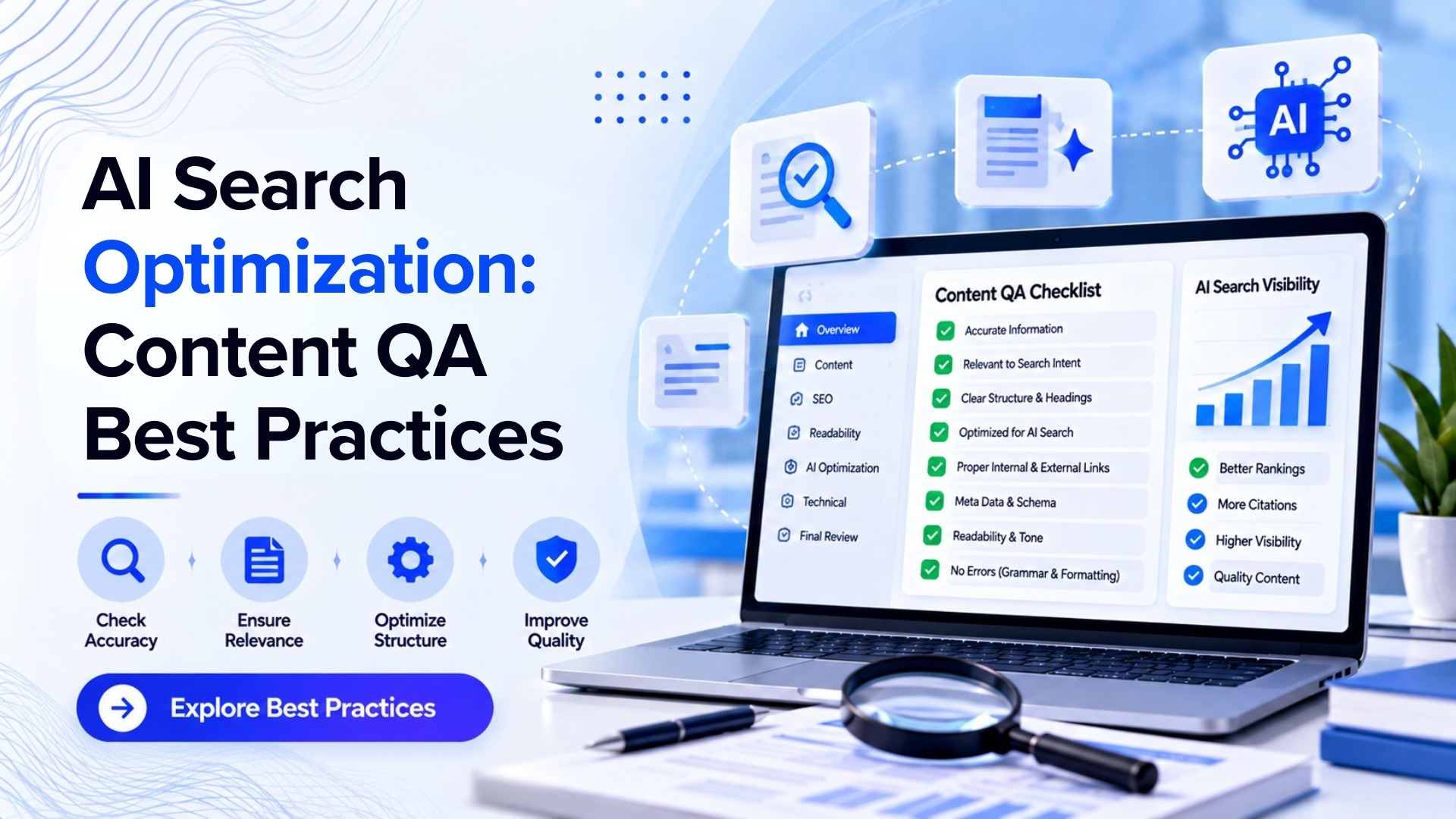
Run each one off a quick checklist: Does the 1st sentence directly answer the target question? Are there at least two specific facts or stats included? Are there at least two specific facts or stats included? Does every FAQ answer stand alone without needing surrounding context? Is internal linking pointing to genuinely authoritative pages, not just random related posts?
This QA step is what separates a real GEO content strategy agencies can rely on from a one-off good post that doesn’t repeat consistently across a content calendar.
This can be scaled to multiple clients.
After theSimple system template and QA list is created below, it’s primarily a training and consistency issue. Training the RUD team is a challenge because they should not be taught rules and principles; they should be taught direct examples! Writers should keep a swipe file of strong before/after examples to allow the new team to ramp up faster.
If you’re an agency that doesn’t want to create and control this full sequence within your own agencies, it’s the White Label GEO service page that optimizes content generation for your scale, all with this exact repeatable method for multiple agency accounts.
FAQ For AI-Powered Content Optimization
What makes content “AI-optimized” versus regular SEO content?
AI-optimized content leads with a direct answer in the first sentence and uses specific facts, while regular SEO content often builds up to the point more gradually.
What resources are available for agencies to use to train their writers to write content optimized for AI?
When training or mentoring on a clear brief template and a QA checklist, plus real examples before and after it is done, the training process is much quicker than when based on separate guidelines alone.
Can this content system work across different client industries?
Yes. The same six overall elements are used; it’s just a difference in the facts and examples, depending on the particular client, like a law firm, HVAC company, or any other business.
This is a real system that can be scaled, and after it’s established, creating AI-optimized content at scale is no longer a constant struggle of creativity.