









White Label Mobile App Development for Agencies: Android, iOS and Ionic Without Hiring
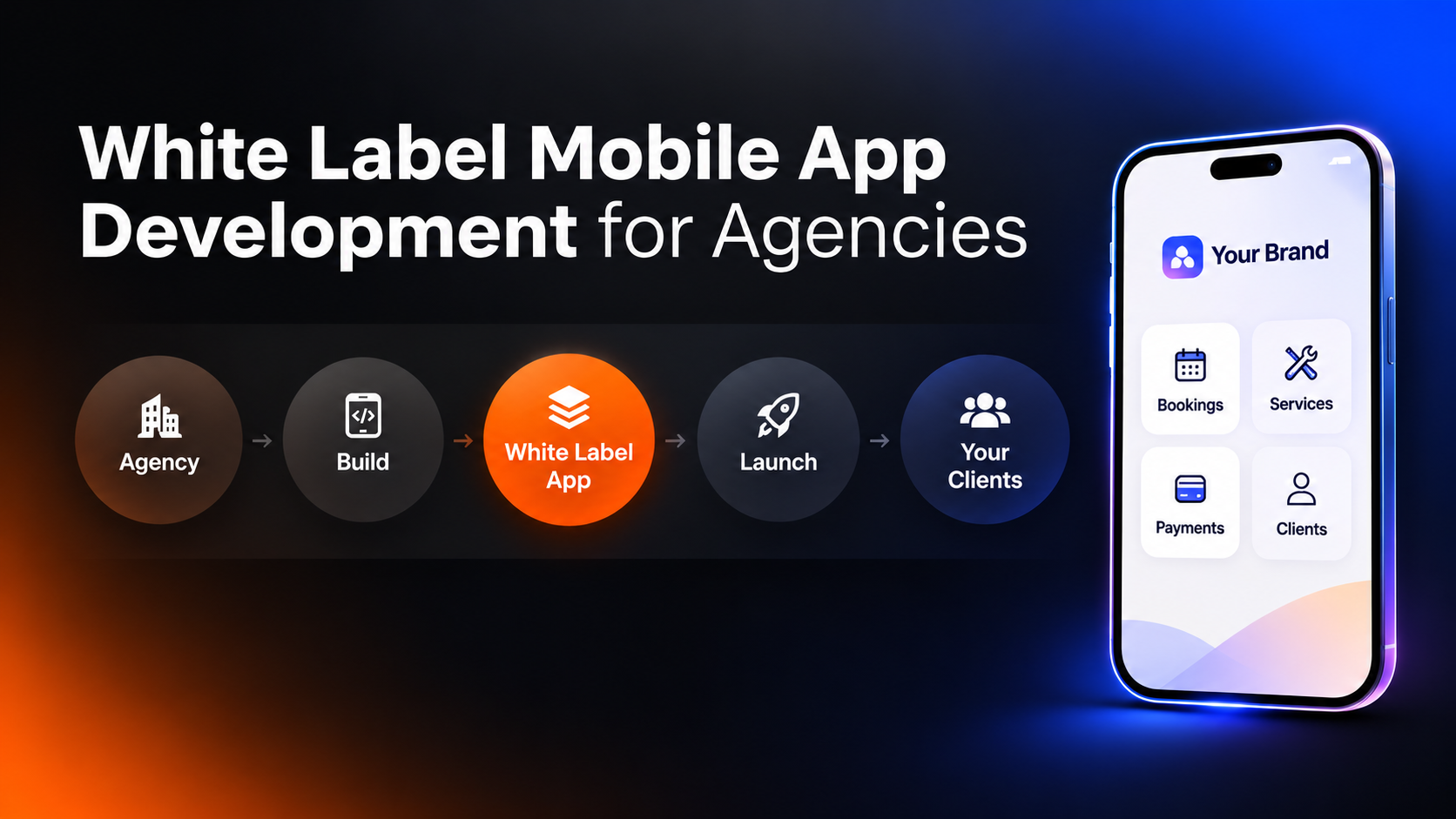
White label mobile app development for agencies involves your agency partner developing your client’s iOS and Android applications and you branding them as your own and maintaining the client relationship. There are still more and more clients who are asking for Apps. It’s possible to say yes without recruiting a mobile staff.
Key Takeaways
- You can be the ultimate point of contact with the client while a white-label partner helps create native or cross-platform apps.
- For features that are demanding, native apps work best; for features that require quick deployment to lower build costs without having to rewrite code, Ionic does the job; and for features that just want a PWA application, sometimes they get it.
- Use an NDA to protect the relationship, define code ownership, set up accounts to the right persons and give them a maintenance plan!
Why Agencies Are Adding Mobile Apps to Their Service Menu
More than simply a convenience, the addition of mobile apps to agencies’ service portfolios is a necessity.
There are plenty of agencies that already develop websites, run ads, and conduct SEO. A customer will then ask, “Can you create an app for us? “Turning that down sends them to another vendor, who may take the rest of the work too.
Hiring iOS and Android developers is slow and risky, and app demand can be uneven. Choosing to outsource mobile app development lets you add the service without fixed salaries. It’s the same logic we cover in our In-House vs White Label Web Development post, and in When to Switch to White Label Fulfillment.
Native app vs “cross-platform”: Android, iOS, and Ionic!
When it comes to technology, clients don’t tend to care as much as you do. Here are the real differences.
| Native | Cross-platform (Ionic, others) | |
Codebase | Separate for iOS and Android | One shared codebase |
Performance | Best for heavy graphics and device features | Good for most business apps |
Cost and speed | Usually higher cost, longer build | Usually lower cost, faster build |
Device features | Full access | Wide access, sometimes through plugins |
| Best for | Complex, high-performance apps | Content, booking, e-commerce, and service apps |
White Label iOS App Development and Android Development
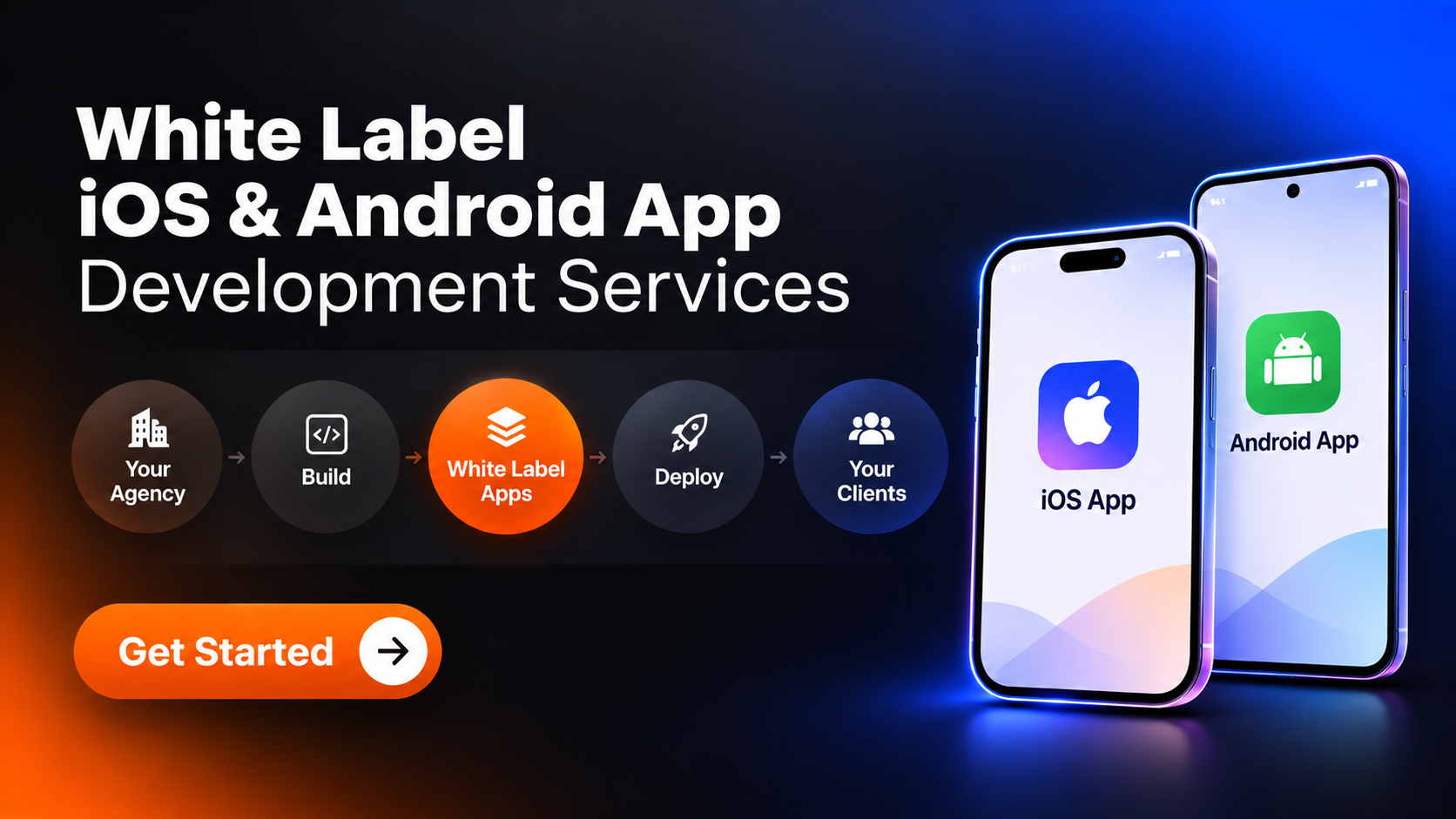
Typically, White Label iOS and Android development is created with the respective devices’ native tools. For apps requiring the best performance and advanced animation or complete access to device hardware, native fits the bill. The compromise is that it takes two builds, more work, and more cost.
Ionic White Label Development
Ionic is a free alternative that enables you to code mobile apps using web tech, such as Html, Css and JavaScript. It works with various frameworks like Angular, React and Vue and it packages a single framework to iOS, Android, and web applications. Ionic White Label App Development suits agencies that already build websites, because the skills overlap. It’s a strong fit for business apps, portals, booking tools, and content-driven apps. It’s less suited to graphics-heavy games.
What White Label Mobile App Development Includes
Typically, the following points are included in a full engagement:
- Consultation, goals, users and features, and priorities.
- Objectives: discovery and scoping of goals, users and features and priorities.
- UX and UI Design: Screens, Flows, Clickable Prototype
- Development: front end, back end or API connections, and integrations
- Tested on real devices and various screen sizes (quality assurance).
- Store submission or “getting your app onto the store”: assembling and submitting to the Apple and Google stores
- The source code, doc and training package for Handoff.
- Industrialization: testing for manufacturing and mass production.
Request a written scope from any partner. Vague quotes cause disputes later. If your clients also need websites, our White Label Web Development page and White Label WordPress Development post cover the web side.
Mobile App or Progressive Web App?
Not every client needs a store app. A progressive web app (PWA) runs in the browser, can be added to the home screen, and can work offline. It’s usually cheaper and quicker to build.
Recommend a PWA when: the client wants a simple tool, has a tight budget, or wants to test demand first.
Recommend a native or Ionic app when: the client needs push notifications, deep device features, app store presence, or a polished experience that customers use often.
Be honest about the trade-offs. PWAs have fewer device features, especially on iOS. Apps also face store review, and Apple may reject apps that are little more than a repackaged website, so build in real app value. Advising the right option builds trust, even when it’s the smaller sale.
How White Label App Delivery Works, From Brief to Handoff
- Brief. You gather the client’s goals and features.
- Scoping and quote. Partner’s promise to access and review an in writing scope and price.
- Design. Your branding and client sign-off come with wireframes and visuals.
- Development. Changes are detected early, with work in stages with demos.
- Testing. QA checks real devices and common edge cases.
- Submission. The app goes to the stores. Review times and requirements vary.
- Handoff. You receive the code, documents and credentials.
- Support. However, you can maintain the app by using a maintenance plan so that operating systems are all updated.
Timelines will depend on the level of complexity of the app, so ask your partner for a plan and compare it to the launch date of your client.
Discover various mobile app development pricing models
Three models are common:
- Fixed price per project. Easy to resell. It needs a tight scope and a change-request process.
- Time and materials. Flexible for uncertain scopes, but harder for clients to budget.
- Retainer for maintenance. Continuing renewal of updates, fixes, and support.
Calculate the cost beforehand which is the partner’s fee plus your time to meet with clients, manage the project and to test it. Add the desired margin then. Be aware that there are additional expenses for store developer accounts, hosting, and third-party services.
White Label App Development Pricing Guide includes a more detailed explanation of how margins are calculated.
How to Protect Client Relationships When You Outsource
This means you sign NDA’s and non-solicitation. Our NDA-protected white-label agency post shows what to include.
- Settle code ownership in writing, usually transferring it to you or the client on payment.
- Set up store accounts properly. Developer accounts are often best held by the client or your agency, not the partner.
- Keep a single contact. All communication flows through you.
- Require documentation so another developer could take over.
- Work out an arrangement for maintenance before, not after, launching.
Read What Makes a Great White Label Digital Marketing Partner for a checklist to use to screen any partner.
Next Step
Start with one client who has already asked for an app. Agree the scope, test the partner on a small project, and build from there. To learn how partnerships work, visit our White Label Agency page.
FAQs: White Label Mobile App Development
Can I resell mobile app development?
Yes. Your partner builds iOS and Android apps, and you sell them as your own product. You retain the client, and the partner works in the background as per an NDA.
What is Ionic and when can you use it?
Ionic is an open repository of tools to build apps that work across platforms using web methods. Integrate it with your business, booking, content, e commerce apps to save time, cost and having one codebase. Pick native if you have graphics and/or intensive demand.
What’s the difference between white label iOS and Android development?
iOS apps are built for Apple devices and Android apps for Google’s ecosystem. Each one uses its own native codebase, and additional tools such as Ionic need to be compiled cross-platform.
Does PWA make sense as a replacement for a mobile app?
Yes, for simple tools and tight budgets. PWAs are faster to develop and operate in the browser, but also have limited features across devices and no guaranteed or built-in presence in the store.