










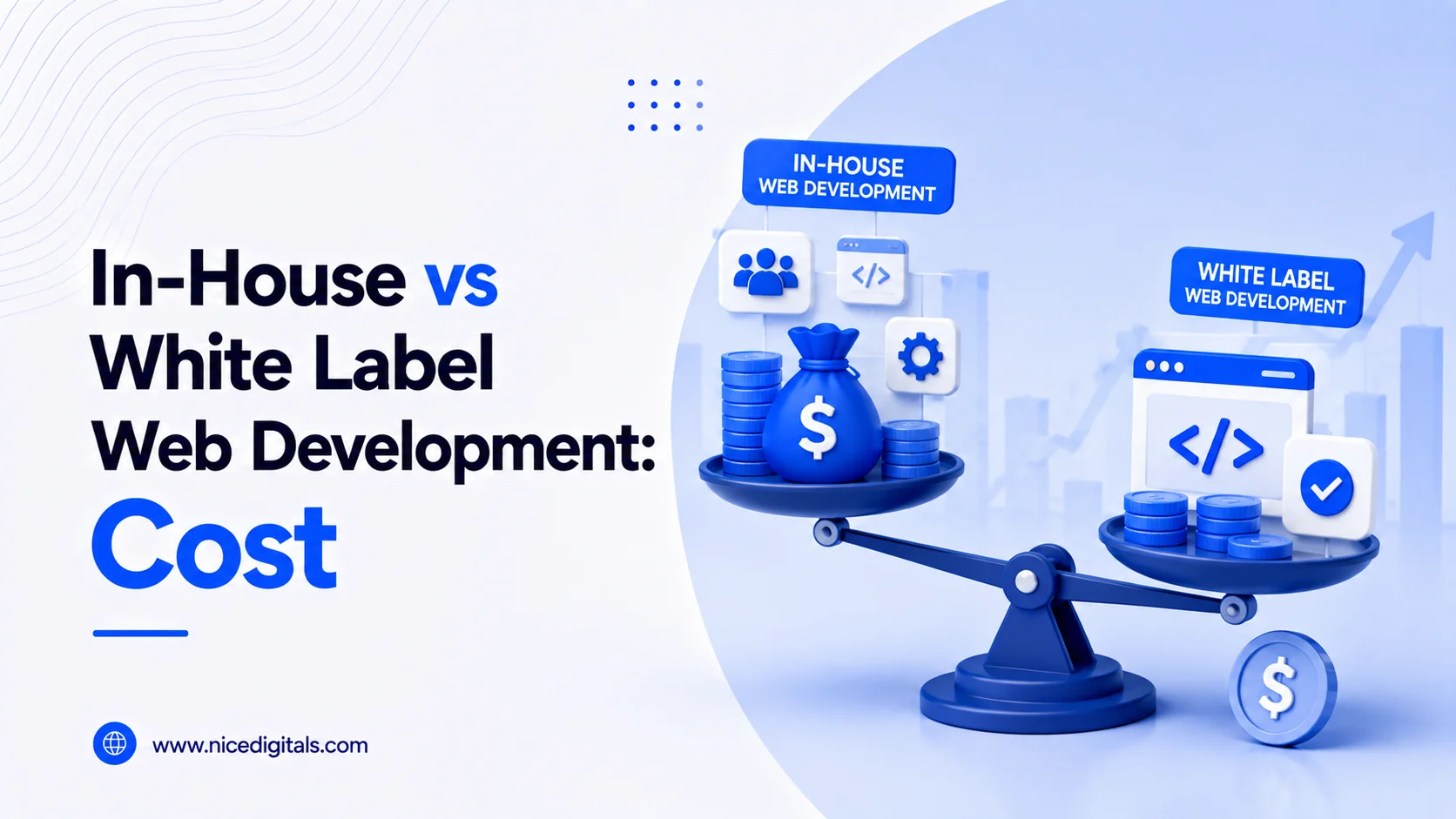
Agencies weighing in-house vs. outsourced web development are really asking one question: at what point does hiring make more financial sense than partnering? It’s time for all the details.
Key Takeaways
- With in-house development, costs of salary, tools, and management are ongoing, and then the price is tied to project sizes in the form of white label.
- White label partners typically offer faster turnaround for agencies without a large steady pipeline of dev work
- The break-even point usually depends on how consistently your agency needs development work, not just total project count
The Real Cost of an In-House Web Team
Having an in-house development team involves more than just the developer’s salary. Costs to companies include those for recruitment, employee benefits, software licenses, continuing training, and management effort that is dedicated to the work. A single mid-level developer’s total cost—salary plus overhead—often runs significantly higher than the headline number suggests.
This cost exists whether or not there’s active project work to justify it. During slow periods, an in-house team still needs to be paid, which creates a fixed cost that doesn’t flex with actual client demand.
The Real Cost of White Label Web Development
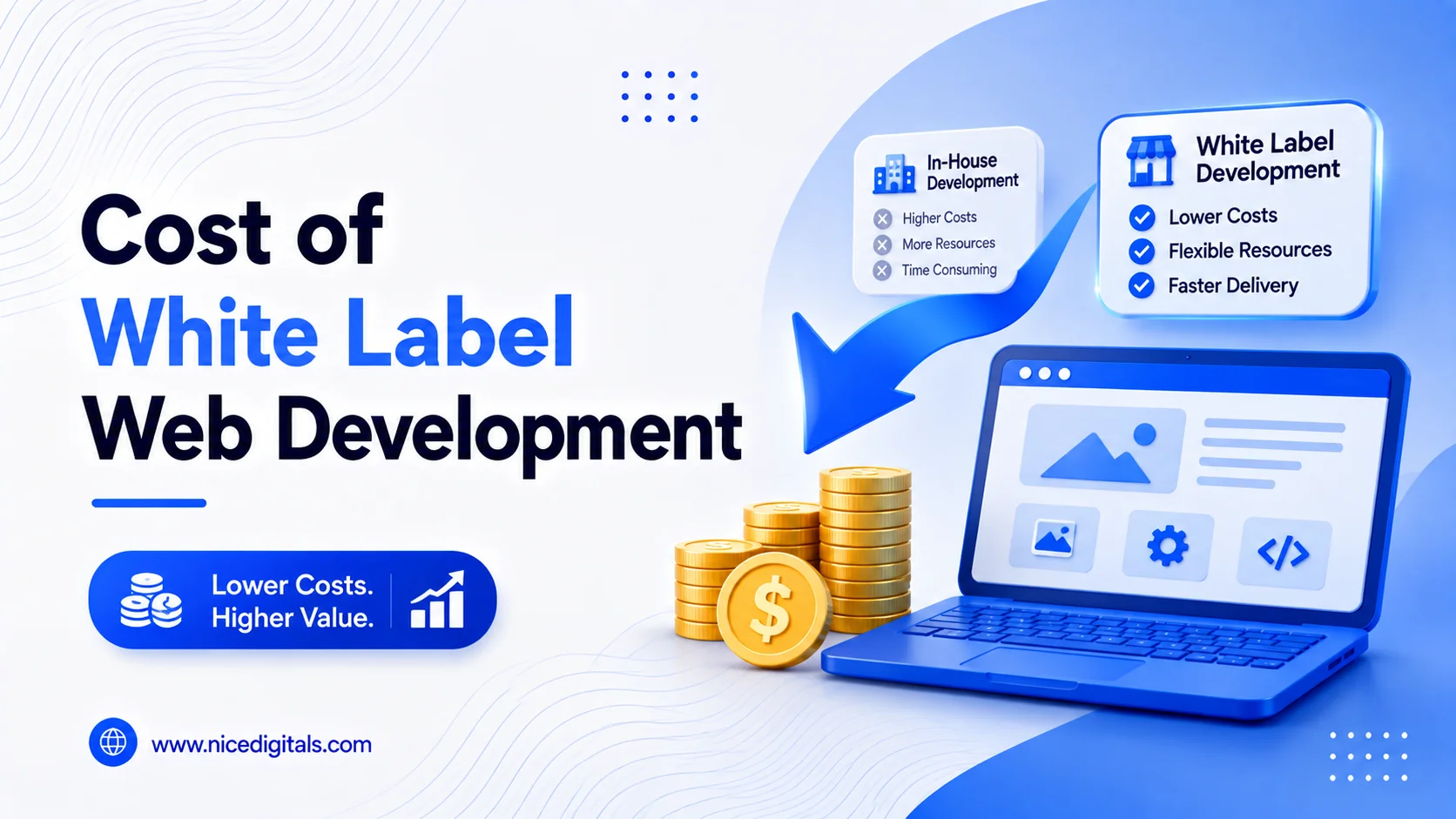
In-house vs outsourced web development team comparisons often miss this key difference: white label pricing is typically per-project or per-hour, meaning agencies only pay for actual work delivered. There’s no idle cost during slow months, no recruiting expense, and no ongoing management overhead beyond reviewing the delivered work.
This model works particularly well for agencies with inconsistent development demand—a few projects one month, none the next—where a fixed in-house salary would be difficult to justify.
Turnaround Time Comparison
In-house teams offer more direct control over prioritization, since developers report directly to agency leadership and can shift focus quickly. But this control comes with a capacity ceiling—one or two in-house developers can only handle so many concurrent projects.
White label partners typically have larger teams available, which can mean faster turnaround on individual projects, especially during busy periods when an in-house team would be stretched thin. The trade-off is slightly less direct day-to-day control over the workflow.
Scalability: Where Each Model Wins
This is often the deciding factor in the Cost of hiring vs outsourcing web development debate. In-house teams scale slowly — hiring another developer takes weeks or months, and firing during a slow period is costly and disruptive. White label partnerships scale immediately—an agency can take on ten projects one month and two the next without any staffing changes.
This flexibility can be a big drawback in terms of cost for agencies with high fluctuations or seasonality in their demand, but this factor alone can make the difference in ensuring The success of a project.
Cost Comparison Table
| Factor | In-House Team | White Label Partner |
| Fixed monthly cost | High (salary + benefits) | None — pay per project |
| Recruiting overhead | Yes | No |
| Scalability | Slow (hiring takes time) | Immediate |
| Turnaround during busy periods | Limited by team size | Typically faster |
| Direct control | High | Moderate |
Finding Your Break-Even Point
The break-even question isn’t really about total project volume — it’s about consistency. If your agency needs steady, predictable development work every month, hiring in-house eventually becomes more cost-effective than paying per-project white label rates. If demand fluctuates significantly, white label partnerships avoid the fixed cost burden during slower periods.
A simple way to think about it: calculate your fully-loaded in-house cost per month, then compare it to what you’d pay a white label partner for the same volume of work over that same period. If your agency consistently exceeds that volume every month, in-house is likely to make sense. If it doesn’t, white label remains the more cost-efficient option.
For WordPress-based projects, our White Label WordPress Development post explains how this model works in the context of WordPress projects—and for ecommerce-based projects, its calculation gets further modified, which is explained in the post on White Label Ecommerce Development.
FAQs for White Label Web Development
Are there situations when it would be cheaper to have in-house web development, and when less so?
Only if your agency has consistent, high-volume development needs every month — otherwise, the fixed salary and overhead costs of an in-house team often exceed white label pricing.
What’s the difference between white label and in-house web development?
In-house teams work directly for your agency with fixed monthly costs, while white label partners deliver projects under your branding with costs that scale per project.
When does it make sense to switch from white label to in-house web development?
When your agency consistently has enough steady development work each month that a fixed in-house salary costs less than ongoing white label project fees.